Features. What I put the most care into.
Every shop comes with the basics: your own domain, guest checkout on Stripe, orders with DHL labels through Sendcloud, your own pages and newsletter sign-ups, in German and English. Below is what I built on top of them, for the way small shops work.
The shop your customers see
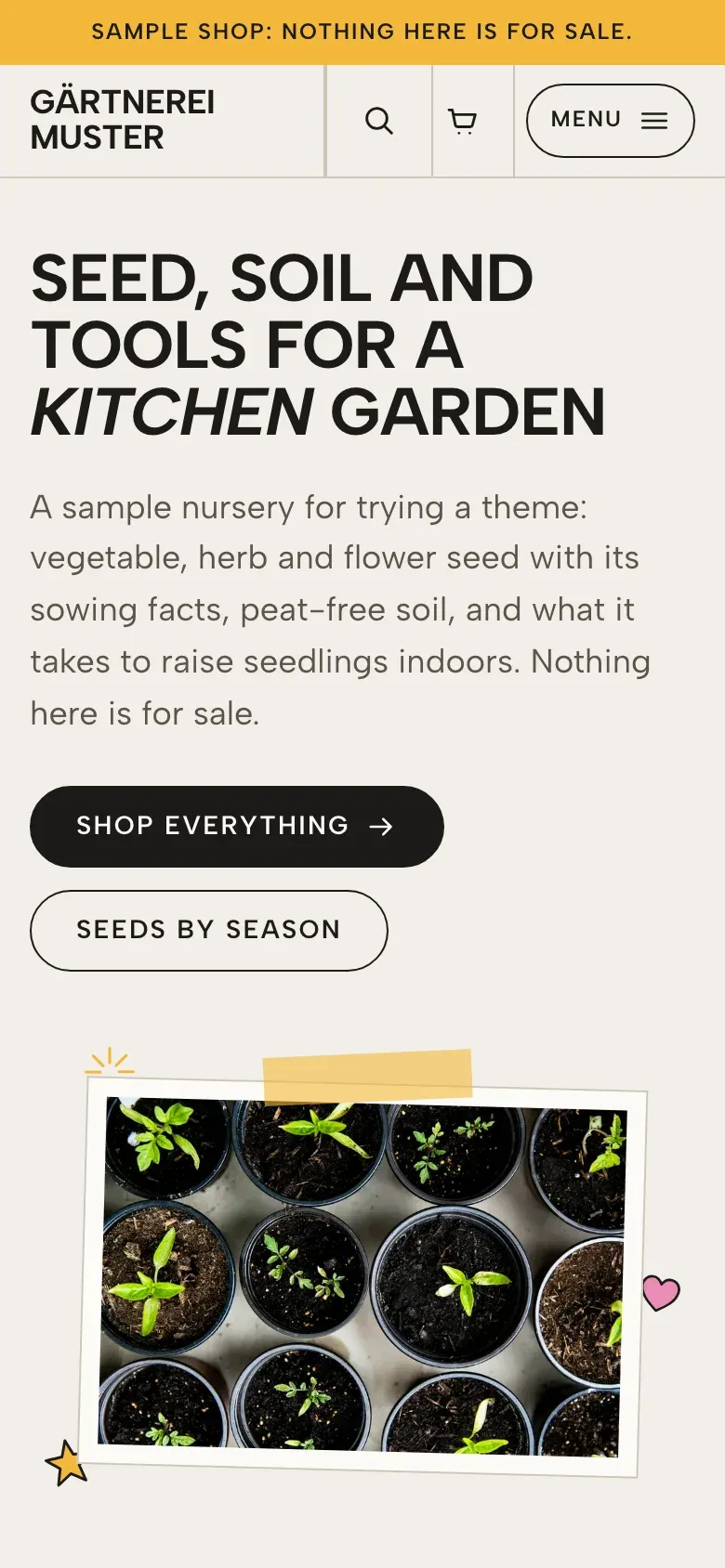
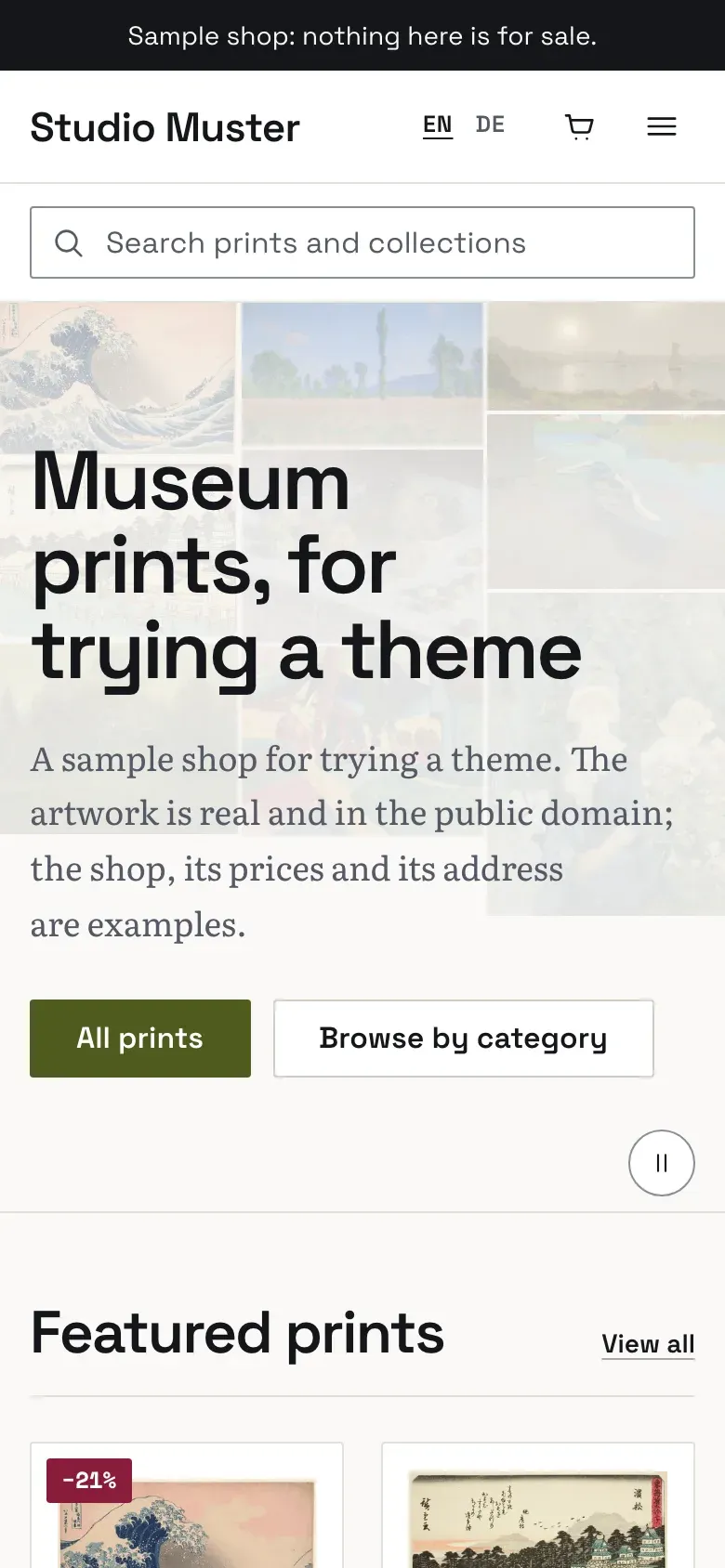
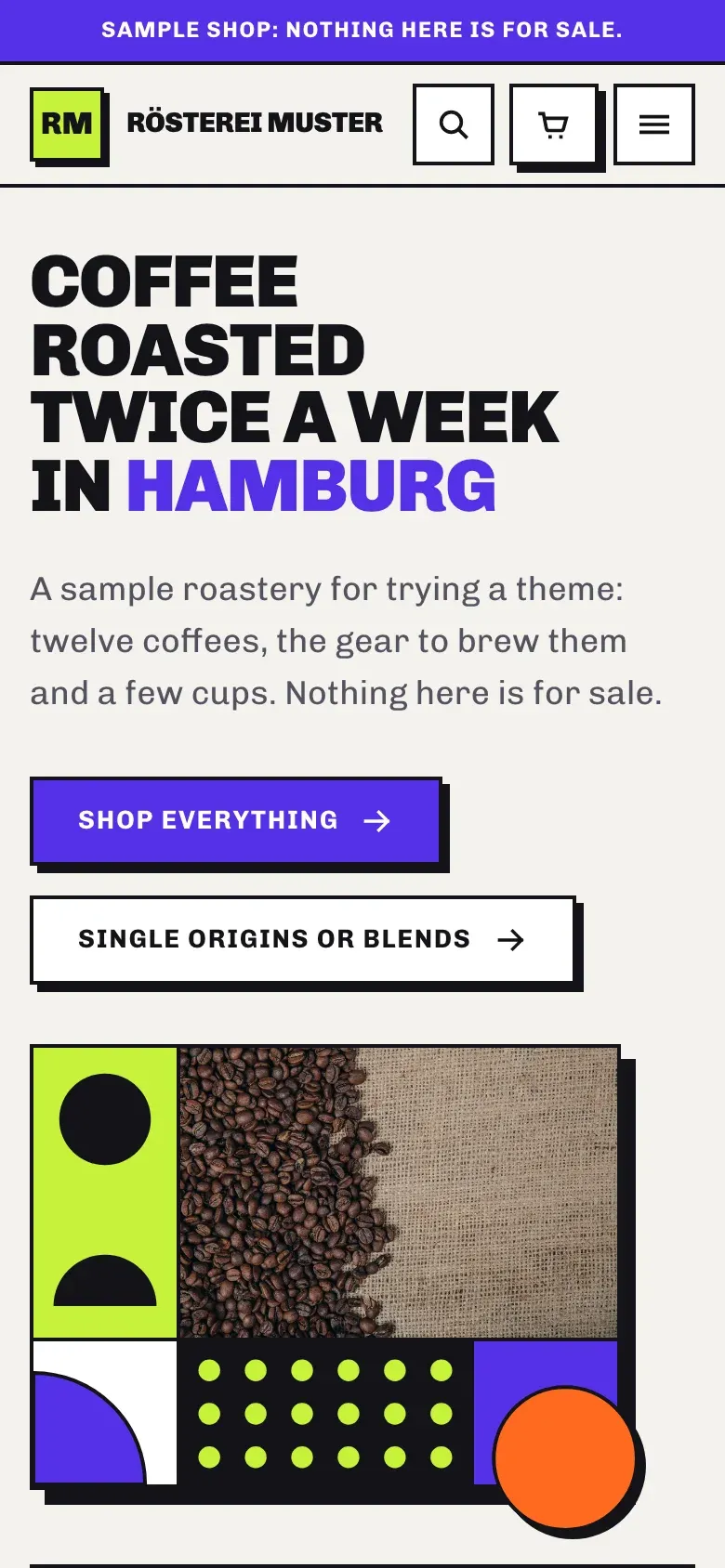
- Made for what you sell. Prints get sizes, framing and room views. Coffee gets grind and a price per kilo, clothing gets sizes and colours, and seeds get their sowing facts.
- Fast, and searchable at once. Every page is built before anyone visits and served from a global network, and search runs in the customer’s own browser. Only price and stock are checked live, so they are always current.
- Try a theme with your own products. Preview another theme with your own products before you switch. Nothing changes for your customers until you do.
Running it
- Products the way you sell them. Sizes, editions, colours or grinds, each with its own price, stock and pictures. A variant template sets up a new product’s options in one go, and collections decide what the home page shows first.
- AI drafts, you decide. Descriptions and colour swatches from a product’s photos, the text search results show, and translations into your shop’s other languages, for one product or the whole catalogue. You read and change the drafts, and nothing reaches the shop until you publish it.
- Sales and analytics, consent first. Revenue, orders and best sellers for any period. Connect Google Analytics, Meta, Pinterest, TikTok or Microsoft Ads by entering an ID: nothing loads before a visitor agrees, and purchases are also reported from the server, so a blocked script doesn’t lose a sale.
Selling in person
- The Till. A screen on your phone for markets and fairs: find the variant, record the sale, and at the end of the selling day count the cash against what was sold.
- Stock for the stall. Move stock from the warehouse to a market and back, and print tags with QR codes: a customer’s phone camera opens the product online, and the Till finds it in one scan.
The legal side, for German shops
- Withdrawal button. The withdrawal button German law requires of online shops, with the confirmation email that goes with it.
- Prices the law asks for. A reduced price shows the lowest price of the 30 days before, worked out from the price history, and goods sold by weight or volume show their price per kilo or litre.
- Invoices. Invoices for every order, including under the small-business scheme, and correction invoices for refunds.
- Privacy by default. No tracking without consent, data kept only as long as it is needed, and data requests answered from the admin.
I build what the law asks of the shop. The legal texts themselves are yours, written with your adviser.
See it with your own products in mind.
A call where I show you the admin and the themes, you tell me what you sell, and I tell you honestly whether it fits.